'/> Amazing Animals: cute Dogs
Showing posts with label cute Dogs. Show all posts

Monday, May 16, 2016

10 Funny-looking Dogs that will Make Your Day

So tired with the day's work... Then go check out these funny looking dogs that will complete your day.

1. The Smiley Dog

Isn't he adorable flashing his cute smile.


2. The Classy Dog

Check out the wild and scruffy big ears of this small brown dog who looks like he could do with some good brushing and combing for his coat.


3. The Stylish Dog

The retro style rounded shades with narrow metal handles looks really cool on this stylish dog.


4. I Believe I can Fly

Check out this funny dog picture in which this small white poodle enjoys a high jump in the bright sun.


5. Scared to the Max

Look at the reaction of the small dog seeing a big one for the first time.


6. The Marathon Runner

Nothing to sniff on, so to kill time, this cutie joins the marathon.


7. The Lover Boy

Check out the absolutely macho look this handsome golden dog gives as he awaits his girlfriend to pass by.


8. The Facebook Dog

This handsome pug is definitely fond off Facebook apps.


9. The Bigear

With long ears stretching out like giant radars it is quite possible to look so sad.


10. The Ultimate Guard Dog

Enter at your own risk, thieves will really think twice before entering this house.


Monday, May 25, 2015

10 Most Popular Dog Breeds in the Philippines

There are no exact criteria in selecting the Top 10 Dog Breeds Most Favored by Pinoys Today. It's a matter of perspective. Several factors are considered but at the end of the day - it all boils down to what the home needs in a given situation. Find out who made the list and learn some facts about them as well.

10. Beagle

photo link

If you’re looking for a mild-mannered companion for kids and adults alike, then the Beagle is the perfect dog for you. The Beagle is a happy, inquisitive, short-haired hound who makes a great family companion, an eager hunter in the field — or both! Their noses guide them through life, and they're never happier than when following an interesting scent. So watch out for those trash. though. That inquisitive nose can sure spread mischief round the house.

Resembling a miniature Foxhound, the Beagle are merry and fun loving, but being hounds, they can also be stubborn and require patient, creative training techniques. Because of its playful nature, firm training is required.

Still, many Pinoys have found comfort in their friendly nature because this little wonder is loving, sweet and gentle. Eager and happy to see everyone, greeting them with a wagging tail.

9. Poodle

photo link

Beautiful, sophisticated, and intelligent, the Poodle stands out in the crowd. Poodles are affectionate family dog and make very good watchdogs for their size. Showing poise, grace and intelligence, many have found this impressive dog to be a very trainable dog. However, they need a regular daily morning walk for without the proper type and amount of exercise they may be high-strung and timid.

8. Pug

photo link

'Big dog in a little body', that's how dog breeders described the pug. Square-proportioned, compact and of a cobby build, the pug is a large dog in a little space. This breed is a good choice for happy-go-lucky masters. For what reason? Pugs are known as the clowns of the canine world because they are comical and like to show off.

These playful dogs are also lovers - love to be the center of attention, and are heartsick if ignored. Pug thrives on human companionship! Pugs are intelligent, loyal, amiable, and affectionate with its family. Pugs seldom get into real mischief. Adults spend much of the day sleeping. Just one thing to remember, it bores easily without variety in its training.

7. Golden Retriever

photo link

Smart, good-natured, and eager to please, the Golden Retriever excels as a family companion and working dog. And with its wavy blond fur, an amiable nature and playful personality, it is easy to understand why this charming dog is a fave for dog-lovers. Not only is it easy to train, the golden retriever has been known for its intelligence. And like other intelligent breeds, it needs to have a job to do, such as retrieving balls, carrying items in its mouth, or simply waking up family members. You should also remember that a golden retriever is definitely not a watchdog.

6. Dalmatian

photo link

With its super-friendly nature, regal carriage and unique spots, you’ll find Dalmatians hard to resist. But this breed is definitely not for everyone. A Dalmatian requires an active owner who can provide plenty of training, socialization, and opportunities for hearty exercise. A Dalmatian must have adequate daily exercise and its high energy level can be exhausting to live with. One thing is sure - Dalmation he will be a great addition to your family given the right combination of love, discipline and training.

5. Shih Tzu

photo link

The descendant of regal dogs of China, the Shih Tzu makes a loyal and lively friend. Shih Tzus 'little lion' may give poodles a run for their money when it comes to the well-dressed department. All those beautiful conflagration of hair is sure to wow your guests and bring your household more finesse than otherwise possible. Just like the poodle breed, you’d need to put extra effort in keeping this breed well-groomed. Don’t worry these dogs have been known to be very warm and friendly. Just don’t forget to keep them exercised so they can let all their energies out.

4. Chihuahua

photo link

Meet the world's smallest dog. The Chihuahua is one dog breed many Pinoy love to have at home. Chihuahuas are loyal, entertaining, and affectionate. They love nothing more than being with his family. Also, Chihuahuas are intelligent and fast learners. It's important to remember to socialize your Chihuahua to children, adults, and other animals.

With its big eyes, big ears, and bigger-than-life attitude, the Chihuahua is the epitome of cocky canine in a petite package. This pint-sized pet is a curious explorer and fears nothing, which makes them good watchdogs.

3. German Shepherd

photo link

Amazingly versatile, highly-intelligent and protective, the German Shepherd Dog has won Pinoy hearts a thousand times. Added to that, GSDs are courageous, alert and fearless. They will not think twice about giving their lives for their masters. Truly a guard dog.

On the sober side, GSDs are obedient, confident, clever and eager to learn. German Shepherds are cheerful, loyal, and love to be close to their families. They can be wary of strangers, but only bark when they feel it is necessary. This is a high-energy dog who needs a lot of activity and exercise. It is recommended to start training the dog at an early age with a firm and loving hand.

2. Doberman

photo link

Noble and athletic, the Doberman Pinscher is a courageous guardian. Like a champion boxer, the Doberman is compactly-built, muscular, agile and athletic. Add intelligence, loyalty, gentleness to the mix and you have a courageous guard dog as well as a beloved family companion. These are the reasons why Dobermans are the most revered and most prized dog in our country. In spite of his positive qualities, the Dobie isn't the right breed for everyone. This able defender is huge at 30 – 40 kg (66 - 88 pounds) , and he's extremely active, both physically and mentally. He needs a lot of exercise.

1. Labrador Retriever

photo link

Black Lab, yellow Lab, Silver Lab, Chocolate Lab — take your pick. The Labrador Retriever has won the hearts of millions of Filipinos the world over. The intelligent, muscular and athletic Labrador Retrievers have proven their usefulness and versatility - from fisherman's companion, to retriever for hunters, to show dog, to rescue dog, to therapy dog and to modern working dog. One role has remained constant: a friendly companion.

There's one dog job that Labs are hopeless at: watchdog. Nevertheless, the loyal, loving, and affectionate Labs are a symbol of warmth and friendship - making a great family dog.

Just don’t forget to harness its energy by exercise and play.

Thursday, April 16, 2015

5 Key Tips For Finding A Lost Dog

Every dog owner will tell you that their dog is not simply a pet. Their dog is a family member. This is why it can be a truly traumatic time if a family loses their dog. Regardless of how the dog got away, the actions you take immediately following can determine if you get your valued family member back or not.

photo link

Many dog owners today are saved by a microchip. This small chip is implanted in the dog, usually at the same time it is under anesthesia while being spayed or neutered. The chip provides GPS tracking in the case the dog is lost or even stolen.

However, if your dog is not microchipped, all is not lost. There are a handful of steps you can follow, in no particular order, that can help you recover your furry friend.

Search for Your Dog

Immediately after noticing the absence of your dog, you should go out looking for him or her. Get family, friends, and neighbors to help with canvassing the neighborhood. Checking places you think your pet might be is usually not successful. When a dog gets loose, there is not telling where he or she might go.

You should walk and drive around the neighborhood calling for your pet by name. People searching on foot can check down small alleys, walking trails, and parks. If you are in the car and searching for your dog, drive slow, call for pet by name with the windows rolled down, and make frequent stops with the vehicle off to listen.

Searching for your dog at night or at dawn is often the best solution. You have much less exterior activity going on which not only creates less noise for you to try to break through, but it also provides less stimulant for your dog.

Make Posters and Info Cards

After a quick yet thorough search, you should take the time to create posters and informational cards. You should make as many posters as you possibly can, with a very simple statement of “LOST DOG” at the top. This should be easy to read even if the person is driving their car. Describe your dog and then include an image if possible. You should also include your dog’s name and offer a reward, but don’t state how much. Then, obviously, include your own contact information.

In addition to posters, you can create informational index cards to pass around the neighborhood. This too should include your pet’s description, name, along with your own contact information. You can even request that people check their sheds or hidden areas of their yards. Leave the index cards wherever people are going to pick it up. You can deliver it door-to-door, slide it into people’s doors, place them under windshields, or place them in mailboxes.

Place a “Lost” Ad in the Paper

A lot of local newspapers allow pet owners to place “Lost” ads for free. Despite how much you read the paper, you never know who might check that section frequently or who may have information about your dog’s whereabouts but have no idea who to contact. In a lost dog situation, every set of eyes matters.

Enlist the Help of Social Media

Believe it or not, social media has been a huge success in terms of helping dog owners find lost dogs. Pet lovers are quick to share and like pet related posts, and missing pets are no different. These fellow dog owners know the importance of returning a pet home and will have no hesitation in reaching out to their own networks to enlist help.

Again, the more people that are aware of the missing dog, the higher the odds are that the dog gets returned. There is no quicker way to spread the word than through a viral Facebook post.

Contact and Visit Local Vets, Shelters, and Pounds

Finally, you should be contacting local veterinarians, shelters, and pounds. You should even contact vet clinics or emergency vet hospitals outside of your local area. Some good Samaritans pick up strays but may unknowingly bring them further away from their home if they know of a responsible animal hospital.

You should also be contacting local shelters, dogs pounds, kennels, and police. Police can help contact animal control as well as their fellow comrades in blue. Kennels will often take in dogs if one of their employees happens upon a stray. When it comes to dog pounds and shelters, a simple call may not suffice. Unfortunately you can’t always take their word for it when they say that they don’t have a dog that meets your description. You should visit the pounds and shelters daily, personally viewing all of the dogs they have.

About the author: No author bio.

Monday, August 18, 2014

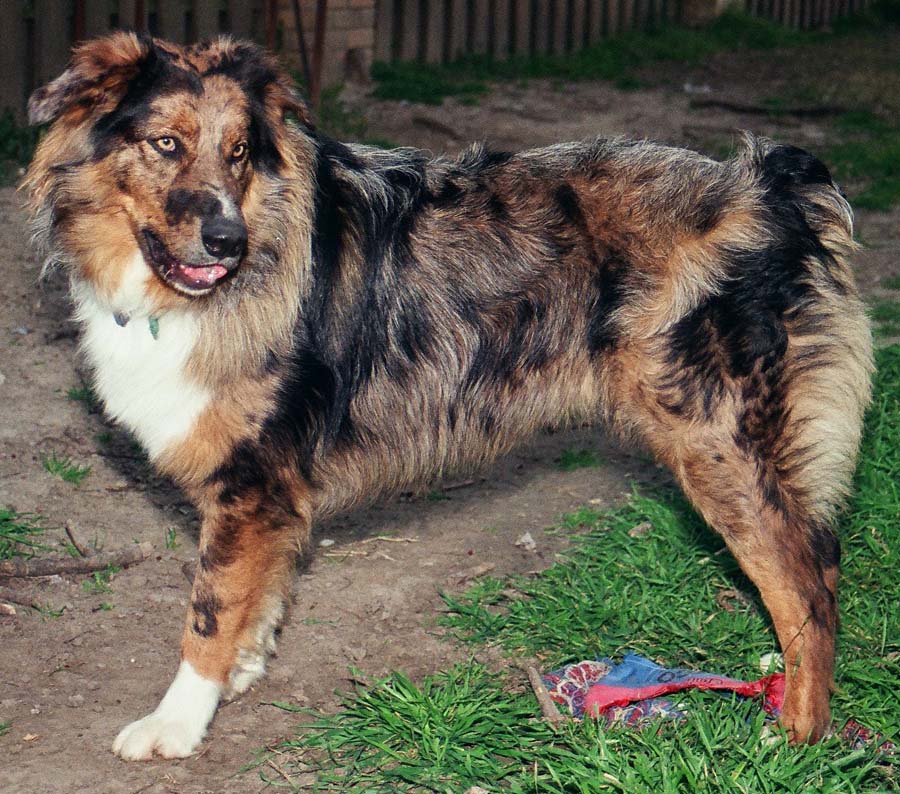
Meet My Dog Magnum: A Fearless Blue Merle

Yes, you read me right… I am a proud owner of a fearless guard dog which I named Magnum (from the popular Magnum Ice Cream). It’s a five-month old Blue Merle. He is no ordinary puppy -- this ‘poker face’ warrior exudes a lot of confidence, intelligence, robust muscles and excellent hunting skills.

Magnum

Once in awhile, he would ‘whisper’ to tell me he wanted to play. But most of the time, he is in a ‘serious mode’, barking at anything that gets near our gate. At a young age, Magnum has shown that he will someday be a dependable guard dog that will protect me, my family and what belongs to me. Cheers Magnum!

Magnum & Sarsi

BTW, are you wondering what is a Blue Merle? Here is a short description of the dog coat called Merle.

Merle is a pattern or a distinguishing marking in a dog's coat, particularly the Australian Shepherd. This incompletely dominant gene can also appear in Collie breeds, Old English Sheepdog, Shetland Sheepdog, the Pyrenean Shepherd, Catahoula Leopard Dog as well as Dachshund.

photo link

photo link

If a dog with a Merle gene is mated on otherwise black dog will produces Blue Merle same through with sable (brown) dog produces a Sable Merle. The Merle gene also affects the dog’s eye, nose and paw pads coloring. This modification can result to changing dark eyes to blue and the nose and paw pads may be mottled pink and black.