'/> Amazing Animals: amazing animals
Showing posts with label amazing animals. Show all posts

Wednesday, February 10, 2016

Veterinary Specialities You may Not have Known Existed

Veterinarians play an essential part in the lives of animal lovers. The thought of having to take our companions, whatever species they are, to visit a vet is upsetting, but there is nobody better able to care for creatures great and small.

Whenever the pets we care for become ill or injured, a trip to our local vet is a priority, regardless of how difficult we may personally find it. Depending on the species of animal needing treatment, a specialist veterinarian may well be needed to provide medical aid.

While most pet-owners gravitate towards dogs and cats, US citizens welcome a huge variety of animals into their homes: reptiles, birds, and more. Small-animal vets are generally based in clinics or hospitals, whereas large-animal specialists travel to see patients at their home (whether this is a domestic setting, a farm, or a zoo).


Veterinary specialists focus on a particular clinical field, dedicated to treat specific species. In order to pursue a specialism, vets must have completed a one-year internship, or two years of practicing in a clinic, before being able to start a residency. Once qualified in a specialism, a vet can be consulted when a patient's condition demands a level of care exceeding that of a veterinarian working in a clinic or hospital.

There is a wide range of veterinary specialist areas, some of which you might not be aware of.

What Type of Vet Specialists are there?

The many veterinarian specialties cover numerous types of medicine, species, and treatment areas. These include obvious areas like cardiology, dentistry, dermatology, and chiropractic.

However, some of those you may not know about are:

photo link

Equine

Equine vets specialize in the care of horses, and are responsible for diagnosing conditions, performing operations, and undertaking any other medical treatments as needed.

Equine veterinarians work with ranchers, horse breeders, competitive horse-owners, and others to keep these magnificent animals in the best of health. This may include performing internal and external examinations, with the former demanding the use of endoscopes.

An equine endoscope is used to investigate the stomach, airways, esophagus, and bladder. Like endoscopes used in human-specific procedures, an equine endoscope provides the vet operating the tool with a clear image of the horse's internal system on a video screen or monitor.

Using vet scopes, an equine specialist can identify any potential or existing problems in a horse's airways or esophagus, diagnosing the source of medical complaints affecting their health.

Preventive Medicine

Vets specializing in preventive medicine play a key part in the health of animals, focusing on the prevention of diseases and conditions. They will also help to promote good health in pets, giving carers the information they need to reduce the risk of their animals becoming ill.

Just as in human patients, trying to maintain a good level of health through proper nutrition and habits is very important.

Toxicology

Veterinarians specializing in toxicology focus on poisons affecting animals, particularly hazards to animals within their food and environment. This may relate to animals in domestic and wild settings, or both.

Veterinary toxicologists research these hazards in-depth, but not all dangers affect all species. As a result, vets may specialize in how toxins affect specific species or types, such as pets or working animals. Toxins cause damage in different ways, such as attacking the central nervous system, causing heart difficulties, and more.


Theriogenology

This branch of veterinary medicine is based around the act of reproduction. The physiology of both genders' reproductive systems and associated areas (gynecology, andrology) is incredibly important to this, with vets required to develop an exceptional level of knowledge on animals' breeding habits.

Parasitology

As the name suggests, this involves studying parasites affecting animals, particularly relationships between the parasites themselves and the hosts. Specialists in these areas will look into parasites affecting domestic and wild animals, covering the parasites' origins and developmental process.

Veterinarians specializing in parasitology use various research methods to identify, diagnose, and treat parasites. Information gathered in this process will also allow them to further prevent cases in the future, and in situations where a parasite may be transmitted from an animal to a human, public health will be considered just as important.

Regardless of the specialist area a veterinarian chooses to focus on, the dedication and focus demanded for this career is considerable. As a nation of animal-lovers, we place a great deal of faith in vets, and are willing to pay high fees to ensure the secure treatment of our pets. By allowing veterinarians to undertake additional training into diverse areas of treatment, the industry makes sure that professionals are always on hand to care for animals with a huge variety of medical issues.

About the author: No author bio

Tuesday, November 10, 2015

10 Eye-catching Rufous Colored Birds

Below is a list of Rufous-colored birds, where the color Rufous (reddish-brown) is the more prominent color of its plumage.

1. Rufous Hummingbird

photo link

Described as one of the feistiest hummingbirds in North America, the Rufous hummingbird (Selasphorus rufus) is a fairly small hummingbird with short wings, and a slender, straight, black bill. Also known for their extraordinary flight skills, the species measures about 8–9 cm (3.2–3.7 in) long. Adult males are easily recognized by its bright Rufous (reddish-brown) overall with white breast and ear patch, vivid iridescent-red throat, and green shoulders. Females are green above, white belly and Rufous flanks.

2. Glossy Ibis

photo link

The Glossy ibis (Plegadis falcinellus) is a medium-sized wading bird averaging around 59.4 cm (23.4 in) with an 80–105 cm (31–41 in) wingspan. It is a striking bird with iridescent bronze and Rufous (red-brown overall) plumage, and shiny bottle-green wings and tail. It has a strongly down-curved bill and long black legs. The glossy ibis is widely distributed throughout most warm temperate and tropical regions of the world.

3. Ruddy Quail-Dove

photo link

The Ruddy quail-dove (Geotrygon montana) is a medium-sized dove widespread in the tropical Americas. The species measures around 19–28 cm in length. The bird is distinguished by having Rufous overall with rust colored back, pale buff throat, streak under eye, and belly. Black tipped red bill, red legs and feet.

4. Rufous Motmot

photo link

The Rufous motmot (Baryphthengus martii) is a large near-passerine bird measuring 46 cm (18 in) long and weighs 195 g (6.9 oz). It is the second largest and arguably the most spectacular of the motmots. The species is a resident breeder in rain forests from northeastern Honduras south to western Ecuador, northeastern Bolivia, and southwestern Brazil. It is mainly cinnamon-rufous, with a black face mask and iridescent patches of turquoise blue on its head. It has a greenish-blue underparts, green wings and flanks, and dark blue tail and flight feathers.

5. Chestnut Munia

photo link

The Chestnut munia (Lonchura atricapilla), also known as Chestnut Muni, is a small Rufous (red-brown) finch found in Bangladesh, Brunei, Cambodia, China, India, Indonesia, Laos, Malaysia, Burma, Nepal, Philippines, Singapore, Taiwan, Thailand and Vietnam. It is easily identified by the black head, Rufous (red-brown) body, light grey beak, and blue-gray eyering. This passerine bird averages 11–12 cm in length. Both sexes look alike - but only the male sings. Before 1995, it was the national bird of the Philippines, where it is known as mayang pula ("red maya").

6. Nankeen Night Heron

photo link

The Nankeen night heron (Nycticorax caledonicus), also known as Rufous Night-Heron, is a medium, stocky heron found in Indonesia, the Philippines, Papua New Guinea, Melanesia, and throughout much of Australia. The striking bird measures around 55–65 cm and weighs 550–1014 g. It is a thick-necked heron, with a stooped appearance. It has reddish-brown upperparts, white-buff underparts, a black crown and bill, as well as yellow legs and feet.

7. Ferruginous Hawk

photo link

The Ferruginous hawk (Buteo regalis) is the largest of the North American Buteos. This species is a large, broad-winged hawk with white head, streaked, Rufous-red shoulders and back; pale rust, gray, or white tail and feathered legs. Adults measure from 51 to 69 cm (20 to 27 in) and weigh around 977–2074 g (34.5–73.2 oz).

8. Orchard Oriole

photo link

The Orchard oriole (Icterus spurius) is the smallest North American orioles. The species averages 16 cm (6.3 in) long and weighs 20 g (0.71 oz). Adult males are black above and rich reddish-chestnut below. It has a black rounded head and throat; short, squared-off tail, and a straight, sharply pointed bill.

9. Philippine Eagle-Owl

photo link

The Philippine eagle-owl (Bubo philippensis) is a vulnerable owl species endemic to the Philippines. It is one of the largest owls in the world, with an impressive wingspan of around 120 centimetres. Full grown averages 40–50 cm (16–20 in) in length. The plumage is predominantly Rufous coloured, Rufous-buff facial disc, tawny-Rufous crown, small ear-tufts and huge yellow eyes.

10. Rufous Woodpecker

photo link

The Rufous woodpecker, (Micropternus brachyurus) is a reddish brown woodpecker found in South Asia. It is a medium-sized bird with a short crest, slightly curved black bill and reddish eye. Adults average 21–25 cm (8.3–9.8 in) long and weigh between 55–114 g (1.9–4.0 oz).

Tuesday, October 6, 2015

10 Exotic Animals With Unexpected Colors

Yes, you read it right! Here is a list of animals that are naturally blessed and dressed with striking color that make them truly stand out from the rest.

White Peacock

photo link

The White peacock (Pavo cristatus mut. alba) is not considered albino because it is simply just white. This elegant-looking bird is actually a subspecies of the Indian Blue Peafowl (Pavo cristatus) created by a genetic mutation. The species does not possess the albino gene. It has overall white plumage, blue eyes and can mate to produce white offspring. On the other hand, Albino peacock has a weaker feather structure and pink eyes. Albino peacocks, even if successful at mating, would not automatically produce white offspring.

Red Velvet Ant

photo link

The Red Velvet ant (Dasymutilla occidentalis), also called Cow killer ant, is a wasp that resembles an ant. These critters are mostly found in Eastern and Western US. They are black overall and the body is densely covered with short, soft hair. Velvet ants are brightly coloured.

Aside from red, shades of red and black or yellow and brown hair overlay the body. The males have two pairs of transparent black wings. The females are wingless, and are often confused with ants. The females have a very toxic sting, but males do not sting.

Nicobar Pigeon

photo link

The Nicobar pigeon (Caloenas nicobarica) is a pigeon mainly found in South East Asia and the Pacific, from the Indian Nicobar Islands east towards Thailand, Malaysia, Indonesia, the Philippines and Papua New Guinea. The species is the closest living relative of the extinct dodo and is classified as Near Threatened.

A large, mainly ground-dwelling bird, the Nicobar pigeon measures 40 cm (16 in) in length. The body-weight is around 600 g. The bird's striking appearance features a metallic green back and wings, dark blackish grey with a silvery purple bloom head and chest feathers and a very short white tail. The feet are purplish red with yellow or buff claws.

Pink Katydid

photo link

Normally katydids are green and somewhat leaf-shaped, but there is an extremely rare Pink katydid. The pink coloration is the result of erythrism -- a rare genetic mutation that either leads to excessive production of red pigment or the absence of normal pigment. Little is known about pink katydids.

Rainbow Grasshopper

photo link

The Rainbow grasshopper (Dactylotum bicolor), also known as the painted grasshopper, is a species of grasshopper in the family Acrididae. The species is widespread in North America and northern Mexico. It is mainly black with distinctive bold color pattern - reddish and yellowish markings, a pale green prothorax and pale green wingpads. Adults grow to an average length of about 20 mm (0.8 in) for males and 35 mm (1.4 in) for females. Rainbow grasshopper does not develop wings and is unable to fly.

Pink Orchid Mantis

photo link

The Pink orchid mantis (Hymenopus coronatus), also known Walking flower mantis, is a mantis native to Malaysia and Indonesia. This master of disguise orchid mantis got its name because it resembles the flower of an orchid. The four walking legs resemble flower petals. This clever insect also changes color from pink to brown according to its environment.

Halloween Crab

photo link

The Halloween crab (Gecarcinus quadratus), also known as red land crab, moon crab, or harlequin land crab, is a colourful land crab found in mangrove, sand dunes and the coastal rainforests of Central America. The species has a dark brown upper carapace, a bright orange-red body and limbs and purple claws. Also, it has a pair of yellow, orange or reddish spots behind the eyes. Two bright yellow to white, triangular 'eyes' decorate the front of the upper carapace, while there are two white spots at the rear of the carapace.

Purple Snail

photo link

The Violet snail (Janthina janthina), also known as purple bubble raft snail, is a marine gastropod that spends its entire life cycle floating freely on the ocean surface in warm seas. The Violet sea snail inhabits the ocean surface by secreting a raft of mucus bubbles to keep it afloat. The species is often found blown ashore by strong winds.

Violet snail is easily recognized by its almost smooth, shell - light purple at the narrow top and a darker purple on the ventral side. Its shell is 3-4 cm in size. The snail's large head has a long cylindrical snout on a very flexible neck. Its body ranges from dark purple to black. Violet snails are born males but become females over time.

Indian Bull Frog

photo link

The Indian bullfrog or Asian bullfrog (Hoplobatrachus tigerinus) is a large frog found in the wetlands of South and South East Asia. This striking frog has pointed snout, long hind limbs and entirely webbed toes. During most of the season, they are a dull olive-green colour and have dark irregular markings. But during the mating season, its appearance can change dramatically. A male Indian Bullfrog will turn bright yellow except for the vocal sacs, which turn bright blue.

Black Rooster

photo link

The Black Rooster (Ayam Cemani) is a rare breed of chicken native to Indonesia. This breed of chicken is characterized by its ink-black feathers that shimmer with a metallic sheen of beetle green and purple. Even its beak, meat, bones and internal organs are black. Ayam Cemani is referred to as the “Lamborghini of poultry.”

Thursday, January 8, 2015

The Carnivores: The World’s Most Fearless and Ferocious Animals

Carnivores are considered the most fearless and ferocious creatures that humans have ever known. They have the built, power and stamina to lord it over hapless prey. These killing machines are gifted with special sensors, including an acute sense of smell, greater eye vision and ferocious teeth that comes in very handy for the kill. And they are blessed with swift, and graceful moves, adding to their predatory skills. Read on to learn more about these carnivores.

photo link

Generally, carnivores, whether they are mammals, reptiles, insects or birds are meat-eaters. We will focus on a specific type of mammal that comprises the order Carnivora –which human deemed fascinating creatures.

photo link

Built to Hunt

These carnivores are bunched together, for they all share a common characteristic –they strive for meat. However, not all of them are considered highly or specialized predators. For example, the Giant Panda is considered herbivore for it feeds on bamboo shoots. Bears and badgers are omnivores since they will eat anything edible. Nevertheless, these animals shared common features with true predators, thus are included in the same group as that of the carnivores. Shapes and sizes don’t matter, true carnivores share certain basic characteristics.

photo link

Almost all carnivores share similar tooth structure. On each side of its top and bottom jaw, true carnivore has a prominent canine tooth, three incisor teeth, four small premolar teeth used for grinding, and three molars. In general, the pointed teeth (canine) are larger and much developed that the cutting teeth (incisor.) Canine teeth are very important weapons, acting as fangs to pierce the main arteries of the prey.

photo link

The smaller grinding teeth (molars) looking like sharp, blade-like stuffs function as meat cutter or a slicer. With less mobile and with small grinding teeth, carnivores rely mainly on its specialized tooth structure to break down the meat into chewable chunks. Also, the tongue specially that of cats are equipped with horny, backward-facing tooth-like bumps.

photo link

Mobility and speed is a must for carnivores! In their case, a skeleton with very restricted features is in place. A large collar bone for instance, can impede its body mobility, thus true carnivore has small collarbone or in some species physically absent. Carnivores typically differ in how they move or walk. There are two main types: the plantigrade species and the digitigrade species. Plantigrade -type of carnivores stamp the soles of their feet on the ground when walking, while the digitigrade-type ones walk on their toes. Digitigrades like dogs and wolves are better adapted for running.

A Sense of Survival

It is very important for carnivores have a good sense of sight, hearing and smell in order to survive in the wild. However, the need for these senses differ from animal to animal.

photo link

Most of these meat-seekers hunt by night, and a good eyesight that could see prey at some distance is a must. Dogs and cats adapt to night vision: they have “taperum” an extra layer of reflective fibrous cells over the retina. These special cells concentrate or redirect the amount of light that enters the eyes. This is the reason why cats and dog's eyes glow at night.

photo link

A number of carnivores do their hunting in dense vegetation using upgraded sense of hearing and smell. The changed is very noticeable in the species ear size and shape. Some species, like the fox, have directional ears, good at pinpointing the sound source with great clarity and accuracy.

photo link

Other body parts aids carnivores to attain a very delicate sense of touch. Raccoons whiskers augment the animals need for a keen sense of smell. Also, these animals have sensitive nerve endings on the soles of their feet.

photo link

For small carnivores like the Coati (Nasua narica) of Central America, having to blend well with its surroundings is very essential tool for survival. The ability to change color (camouflage) enables the animal to creep up on its prey unseen. Also, it serves as a defense mechanism to escape or free from harm from bigger predators.

photo link

An Individual Identity

Since almost all carnivores are gifted with an acute sense of smell marking out the boundaries of its territory will come in very helpful. These fearless animals emit special and identifiable scents and rub a certain part of its body against any object to mark out the scope of its territory. In some species, these foul-smelling scents serve as a defense mechanism against larger predators. Some species like the skunks and polecats produce these scents through glands in the skin.

photo link

Carnivores hunting style differs from species to species: lions go for ambush, cheetahs go for swift and stealthy pursuits and coyotes wolves and dogs leap on their prey.

photo link

But there is one carnivore species that has the most adaptable hunting skills. The Crab – eating Raccoon can climb well and swim well in pursuit of its prey. It lives in areas near marshes, rivers and lakes — makes its home in the trees.

Thursday, November 13, 2014

10 Foods That Could Kill Your Dog

If you are a dog owner, then you should know a cardinal rule; know what you can and can't feed your dog. You would say that as long as I stick to a pretty decent doggy diet, my dog would be fine. You are so wrong!

The truth is: there's a lot of foods you probably didn't know about that can actually be really bad for your dog. These foods include some that are perfectly healthy for humans. Perhaps you know by now that feeding your 'man's best friend' chocolates and milk is a big taboo. For those surprised to learn about this stuff, let me educate you.

My Mini Pincher - Achilles

Chocolate is one of the most common foods that is bad for dogs for it contains caffeine and theobromine which fall under the methylxanthines category. If eaten by a dog, chocolate can cause vomiting, dehydration, abdominal pains, muscle tremors, elevated body temperature, irregular heart rhythm, seizures and death.

How about milk? Puppies drink milk from their mothers after they're born. However, like humans, dogs can also suffer from lactose intolerance. Also, milk contains milk sugar that dogs don't have the enzymes to break down. Feeding your dog milk could result to vomiting, diarrhea and other gastrointestinal problems. While it's not immediately life-threatening, it can contribute to serious bacterial exposure in dogs that could eventually lead to disease.

Aside from chocolates and milk. Here are 10 more foods you should avoid feeding your dog.

1. Cheese

Like milk, cheese also has sugars and fatty components that dogs don't have the necessary enzymes to break down. Eaten in excess, cheese and other dairy products, can cause diarrhea and vomiting.

2. Onion

While onions are a good spicy stuff, they can do more than just make your dog cry. Why? It contains compounds that can be harmful to dogs if ingested enough. Onions can damage red blood cells in dogs causing them to become weaker and less mobile.

3. Garlic

Consider your dogs vampires and keep them away from raw garlic as much as possible. Garlic contains compounds that are strong in toxicity. Same effect with onion, your dog will be be tired and reluctant to move. In severe cases, a blood transfusion might be required.

4. Coffee

Coffee contains a stimulant known as Methylated xanthine. This methylated xanthine stimulates the nervous system in dogs, that could lead to vomiting, restlessness, heart palpitations and even death.

5. Yeast dough

Chichay - Achilles sister

The raw yeast dough from making bread can ferment in a dog's stomach, becoming toxic. Yeast dough can expand in your dog's stomach or intestines and create a large amount of gas in the digestive system. The reaction can result in severe pain and a potentially ruptured stomach or intestinal tract. Vomiting, abdominal discomfort and lethargy can also occur.

6. Bacon

Foods rich in fat, like bacon, can lead to the disease pancreatitis in dogs. Once a dog has developed pancreatitis, their pancreas' become inflamed and stop functioning correctly. This leads to all sorts of problems with digestion and nutrient absorption.

7. Grapes

Grapes and raisins can be extremely toxic to dogs. While its currently unknown what chemicals and compounds are in grapes that cause toxicity in dogs, the results of consumption can be pretty devastating. Grapes and raisins can cause rapid kidney failure. Also, it can lead to vomiting, diarrhea, dehydration and lack of appetite. Death from kidney failure may occur within three to four days.

8. Macadamia nuts

Recent studies showed that macadamia Nuts can be incredibly harmful to dogs if eaten. Just like grapes, the toxic chemicals found in macadamias are still unknown right now, but they are known to cause a toxic reaction to dogs if ingested. Dogs will develop weakness and an inability to walk, specifically in their hind legs. Also could lead to vomiting, chills, and hypothermia.

9. Avocados

Avocado leaves, pits, bark and fruit contain a toxin called persin. They can cause upset stomachs in dogs, breathing difficulties, and fluid buildup in the chest.

10. Apple cores

The core of an apple (as well as apricots, peaches, pears, and plums) contain cyanogenic glycosides which is also known as cyanide. Some of the symptoms that come from ingesting the toxin are dizziness, hyperventilation, seizures, collapsing, hyperventilation, and even coma.

Thursday, October 2, 2014

Six Interesting Animals That Start with The Letter X

Can you give me five animals whose names start with the letter X? Your guess is as good as mine. But I can give you two — a popular aquarium fish and a weird breed of dog. Surprisingly, there are at least 25 animals that starts with X. Here are some of them.

X-Ray Tetra

photo link

The X-Ray Tetra (Pristella maxillaris), also as known as the Golden Pristella Tetra, is a small species of schooling fish that inhabits the coastal waters of the Amazon River. It is the most sought after freshwater fish kept in artificial aquariums today. The most characteristic feature of this colorful fish is its near transparent body, which serves as protection from predators. Furthermore, the species sports a very captivating color pattern – a strikingly banded dorsal and anal fins painted in white, black and yellow color.

Also, the caudal fin has a striking light red or pink coloration, and has a re-tipped tail.

The X-Ray Tetra can reach 5 cm (2 -3 inches) in size. Typically, both sexes are very similar in appearance, though females are much larger and rounder than males. Like other tetras, the species mainly feed on small insects, aquatic plants, small shrimp, worms and other planktonic animals.

Xantus’s Hummingbird

photo link

The Xantus’s Hummingbird (Basilinna xantusii) is a medium-sized hummingbird found only in Baja California. These husky birds inhabit bushes, forests and home gardens. It can reach 8–9 cm long, and weighs about 3-4 g. Adults typically have overall green plumage with cinnamon brown underparts. Other distinctive features include: white eye stripe, large red bill capped with black tip, and orange, Rufous tail. Using a long extendable tongue, these birds sip nectar out of plants. They also take some small spiders and insects like crickets and termite.

Xenops

photo link

Xenops is any of three extant species of passerine birds in the bird family Furnariidae. The species inhabit tropical rain forests of Mexico, Central America and South America. The three species include: Plain Xenops (Xenops minutus), Slender-billed Xenops, (Xenops tenuirostris), and Streaked Xenops (Xenops rutilans.) The species, known for its fast, sharp-sounding song, measures about 12.5 cm (5 in) long.

This lesser-known bird is easily recognized by its near flat beak with upward curved tip (except in the Slender-billed Xenops), long tail, buff or Rufous wing stripe and brown underparts. It feeds mainly on insects (especially ants) by hammering open decaying stumps or bare twigs.

Xenopus

photo link

Xenopus is any of 20 extant species of highly aquatic frogs in the Xenopus genus. Collectively as African Clawed Frogs, the species are native to Sub-Saharan Africa. Xenopus, in particular (Xenopus laevis), is studied for biomedical research.

The genus Xenopus has flattened, oval-shaped and sleek body. The eyes are set on top of the head. All species have no moveable eyelids, eardrums and tongues. It has powerful webbed toes, with three of the toes on each foot have striking black claws. Adult frogs rely on their small forelimbs to forage for food.

Xerus

photo link

Xerus is any of the four species of African ground squirrel found throughout southern Africa. These squirrels prefer grasslands, open woodlands, or rocky country, living in burrows. They live in colonies with comprising about 19 to 20 individuals in a group. Their diet includes: grasses, fruits, seeds, grains, roots, and occasionally, eat insects, small vertebrates and bird eggs. The South African Ground Squirrel does not hibernate.

Xoloitzcuintli

photo link

The Xoloitzcuintli or Xolo, is a hairless breed of dog native to Mexico. Also known as Mexican hairless dog in English speaking countries, the breed comes in toy, miniature and standard sizes. The breed ranges in size from about 10 to 14 inches (toy), 14 to 18 inches (miniature) and 18 to 23 inches (Standard). Average weight is from 4 to 20 kg (10 to 50 lbs.) Color ranges from black, grayish black, bronze, red, or slate gray.

Xolo dog has a sleek, hairless body with a small amount of short, coarse hair on the head and tail. It has a smooth head, long neck, almond-shaped eyes, wrinkled brow, large bat-like ears, and a low-set tail.

The breed is noted for its calm demeanor. The Xolo is agile, alert, athletic, loving, loyal, obedient, and highly intelligent breed of dog. It suits well living in the house, and needs a moderate amount of daily exercise. Just remember, the breed is sensitive to sunlight, so avoid leaving him outdoors for long periods during the day. The coated and the hairless variety of Xolo are very easy to groom and care for. Bathe the dog weekly in order to keep his skin clean. Life Expectancy: About 15 and up to 20 years.

Check out the entire Animal Alphabet list here:
Amazing Animal Alphabet Series 1
Amazing Animal Alphabet Series 2

Monday, August 18, 2014

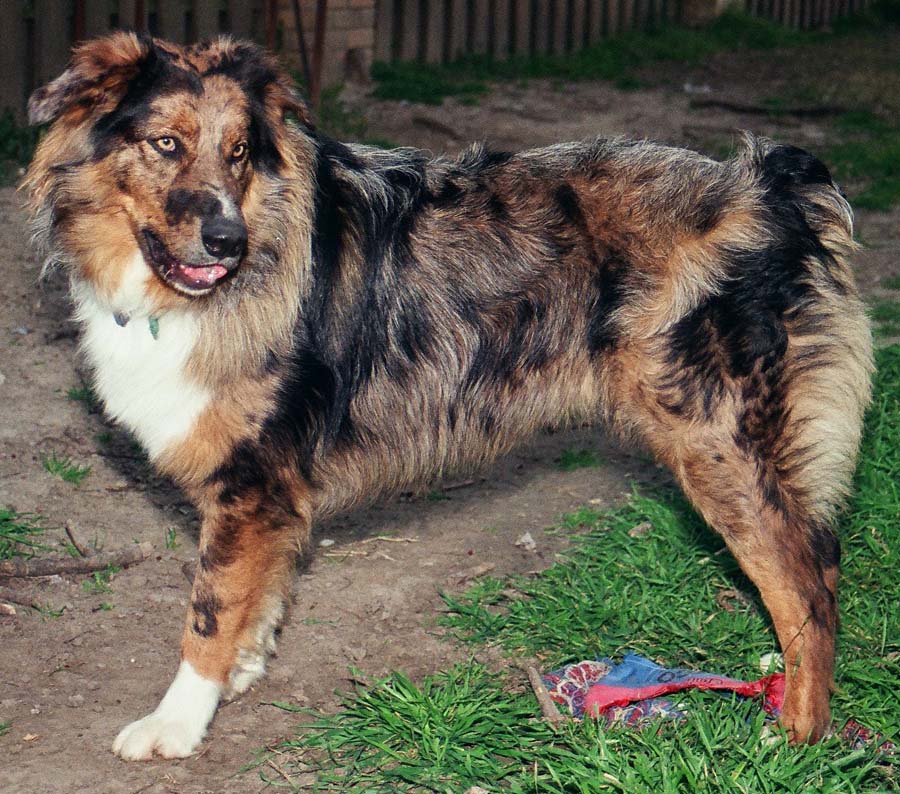
Meet My Dog Magnum: A Fearless Blue Merle

Yes, you read me right… I am a proud owner of a fearless guard dog which I named Magnum (from the popular Magnum Ice Cream). It’s a five-month old Blue Merle. He is no ordinary puppy -- this ‘poker face’ warrior exudes a lot of confidence, intelligence, robust muscles and excellent hunting skills.

Magnum

Once in awhile, he would ‘whisper’ to tell me he wanted to play. But most of the time, he is in a ‘serious mode’, barking at anything that gets near our gate. At a young age, Magnum has shown that he will someday be a dependable guard dog that will protect me, my family and what belongs to me. Cheers Magnum!

Magnum & Sarsi

BTW, are you wondering what is a Blue Merle? Here is a short description of the dog coat called Merle.

Merle is a pattern or a distinguishing marking in a dog's coat, particularly the Australian Shepherd. This incompletely dominant gene can also appear in Collie breeds, Old English Sheepdog, Shetland Sheepdog, the Pyrenean Shepherd, Catahoula Leopard Dog as well as Dachshund.

photo link

photo link

If a dog with a Merle gene is mated on otherwise black dog will produces Blue Merle same through with sable (brown) dog produces a Sable Merle. The Merle gene also affects the dog’s eye, nose and paw pads coloring. This modification can result to changing dark eyes to blue and the nose and paw pads may be mottled pink and black.

Monday, July 21, 2014

Seven Intriguing Animals That Start with The Letter V

A list of seven intriguing V animals you probably never heard of.

Verdin

photo link

The Verdin (Auriparus flaviceps) is a very small passerine bird. This tit is the only species in the genus Auriparus and the only North American member of the penduline-tit family (Remizidae). Unlike the tits, it has a medium-length tail and has a sharply pointed bill. Verdins have yellow faces and chestnut shoulder. It is called Baloncillo, Párido del desierto (Spanish) and Auripare verdin (French).

Other interesting facts:

Range: Southern and East Africa
Habitat: Bushy woodlands
Size: Length: 9–11 cm (3.5–4.3 in)
Weight: 5–8 g (0.2–0.3 oz)
Color: Adults have dull gray overall with darker shade on upperparts.
Diet: Omnivore
Prey: Leaves, Fruits, Insects
Lifestyle: Solitary
Conservation Status: Least Concern
Fun Fact: Builds roosting nests all year round.

Vervet

photo link

The Vervet Monkey (Chlorocebus pygerythrus), or simply vervet, is a medium-sized to large monkey of the family Cercopithecidae. There are five distinct subspecies of vervet monkey namely: Chlorocebus pygerythrus excubitor, Chlorocebus pygerythrus nesiotes, Chlorocebus pygerythrus hilgerti, Chlorocebus pygerythrus rufoviridis, and Chlorocebus pygerythrus pygerythrus.

Other interesting facts:

Range: United States and northern Mexico
Habitat: coastal forest, riverine woodland, and savanna
Size: Length: 46cm – 66cm (17.9in – 25.7in)
Weight: 3.5kg – 5kg (7lbs – 10lbs)
Color: overall body color is mostly grizzled-gray.
Most Distinctive Feature: Black face with white ear tufts
Diet: Omnivore
Prey: wide range of fruits, figs, leaves, seeds and flowers
Lifestyle: diurnal and social ; living in groups of up to 72
Age Of Sexual Maturity:2 – 5 years
Gestation Period: 163 days
Average Litter Size:1
Life Span: 12 – 24 years
Conservation Status: Least Concern
Fun Fact: Uses different calls upon detecting different types of predators

Vicuña

photo link

The Vicuña (Vicugna vicugna) or vicugna is the smallest of the six species of camel. The national animal of Peru, this intriguing animal produces a very expensive and extremely fine wool. The vicuña was almost hunted to extinction for its beautiful soft wool.

Other interesting facts:

Range: South America, primarily in the central Andes.
Habitat: Grasslands at elevations of 3,500-5,800 meters
Size:
Body Length: 138-151 cm / 4.6-5 ft.
Shoulder Height: 86-96 cm / 2.8-3.2 ft.
Tail Length: 23 cm / 9.2 in.
Weight: 45-55 kg / 99-121 lb.
Color: The overall color of the soft wooly coat is reddish brown with the underside of the head, and the belly being dirty white.
Distinctive Features: A pompon-like ‘mane’ of silky white hairs adorns the base of the neck
Round head, triangular ears, very long necks, and big, forward facing eyes
Diet: Omnivore
Prey: Grasses.
Lifestyle: diurnal and social; living in groups of 5-20 animals
Age Of Sexual Maturity: Around 24 months
Gestation Period: 330-350 days
Young per Birth: 1
Life Span: 20 – 24 years
Conservation Status: Threatened
Fun Fact: Very shy and constantly alert, vicuñas will flee at the slightest sign of danger.

Visayan Warty Pig

photo link

The Visayan Warty Pig (Sus cebifrons) is a small, forest-dwelling pig endemic to the Philippines. It gets its name from the three pairs of fleshy “warts” present on the pig’s face.

Range: Visayan islands of Negros and Panay in the Philippines
Habitat: Dense rain forest as well as grasslands
Size:
Head and body length: About 100 cm
Shoulder height: 58 to 63 cm (males)
Tail length: 23 cm
Adult weight: up to 80 kg (males)
Color: The overall color is dark gray
Distinctive Features: The body is sparsely covered with bristly hairs
A tuft of hair in between the ears
Distinctive white stripe which runs over the bridge of the nose behind the mouth.
Diet: Omnivorous; feeds mainly on fruits, roots, and tubers
Lifestyle: tend to live in groups of four to six
Age Of Sexual Maturity: As young as 12-14 months
Gestation Period: 118 days
Young per Birth: 2-4, with 3 being the average
Life Span: 10-15 years
Conservation Status: Critically endangered (2008)
Fun Fact: a Visayan Warty pig would grow manes, giving it a Mohawk façade

Vireo

photo link

The Vireos are small to medium-sized passerine birds confined to the New World. This intriguing animal derives its name from the Latin for “I am green”). The family comprises three distinct groups: The true vireos, the peppershrikes and shrike-vireos, and the greenlets. Most species are non-migratory.

Other interesting facts:

Range: Most species are found in found in northern South America, Central America or Mexico
Habitat: inhabit forest canopies, or mangrove swamps
Size: depending on species;
Length: 10 to 17 cm They range in size from the Choco Vireo, Dwarf Vireo and Lesser Greenlet, all at Weight: 8 to 40 grams
Color: Typically dull-plumaged and greenish in color
Diet: mainly on insects and other arthropods as well as some fruits
Lifestyle: occur in pairs or family groups
Conservation Status: Least Concern
Fun Fact: Males of most species are persistent singers

Vizcacha

photo link

Viscachas or vizcachas are are five extant species of medium-sized rat in the family Chinchillidae. These include: Plains viscacha (Lagostomus maximus), Northern viscacha (Lagidium peruanum), Mountain viscacha (Lagidium viscacia), Wolffsohn’s viscacha (Lagidium wolffsohni), and Lagidium ahuacaense.

Though they resemble rabbits, they are closely related to chinchillas.

Other interesting facts:

Range: endemic to Argentina
Habitat: inhabit rocky desert and arid environments
Size:
Length: 11 to 18 cm (4.3 to 7.1 in)
Weight: 85 to 121 grams (3.0 to 4.3 oz).
Color: has light brown fur with white underparts
Distinct Features: relatively long, bushy tail measuring about 12 to 16 cm (4.7 to 6.3 in) long
the presence of numerous whiskers on top of the mouth
Diet: herbivorous; feed on leaves, fruits and seeds as well as some fruits
Lifestyle: nocturnal and solitary

Vole

photo link

Voles are small rodents comprising more than 150 species. It resembles a mouse but with a solid body, a slightly rounder heads, and smaller eyes and ears. Some of the species of voles include: Southern red-backed voles (Clethrionomys gapperi), Long-tailed voles (Microtus longicaudus), Mexican voles (Microtus mexicanus), and Prairie voles (Microtus ochrogaster).

Other interesting facts:

Range: Different vole species are found all over North America
Habitat: underground tunnels and burrows
Size:
Length: About 4 to 8.5 inches long
Weight: 0.8 to 3 ounces
Color: vary in color from brown to gray
Diet: barks, fruits, grasses, leaves, stems, Roots,
Lifestyle: are active day and night throughout the year
Age Of Sexual Maturity: 1 month
Gestation Period: 20 to 23 days
Young per Birth: 3-5 pups per litter
Life Span: 2-6 months
Fun Fact: A female vole can have 80 offspring in a year!

Check out the entire Animal Alphabet list here:
Amazing Animal Alphabet Series 1
Amazing Animal Alphabet Series 2